
Macro1mo ago
EIA Crude Inventories Draw 0.4M vs Forecast 1.4M Draw
EIA crude inventories drew 0.4M for the week ending September 4, versus a 1.4M draw forecast and a 4.5M prior draw — a smaller-than-expected decline.
Editor·1 min read
CENTCOM struck three IRGC crude carriers on 5 September after ballistic missiles toward two US Navy ships. Adm. Brad Cooper set the cost message. Reuters stamps Tehran’s counterclaim on Hormuz routes. Iran’s Rezaei flagged a new restricted maritime zone — attributed claims only.
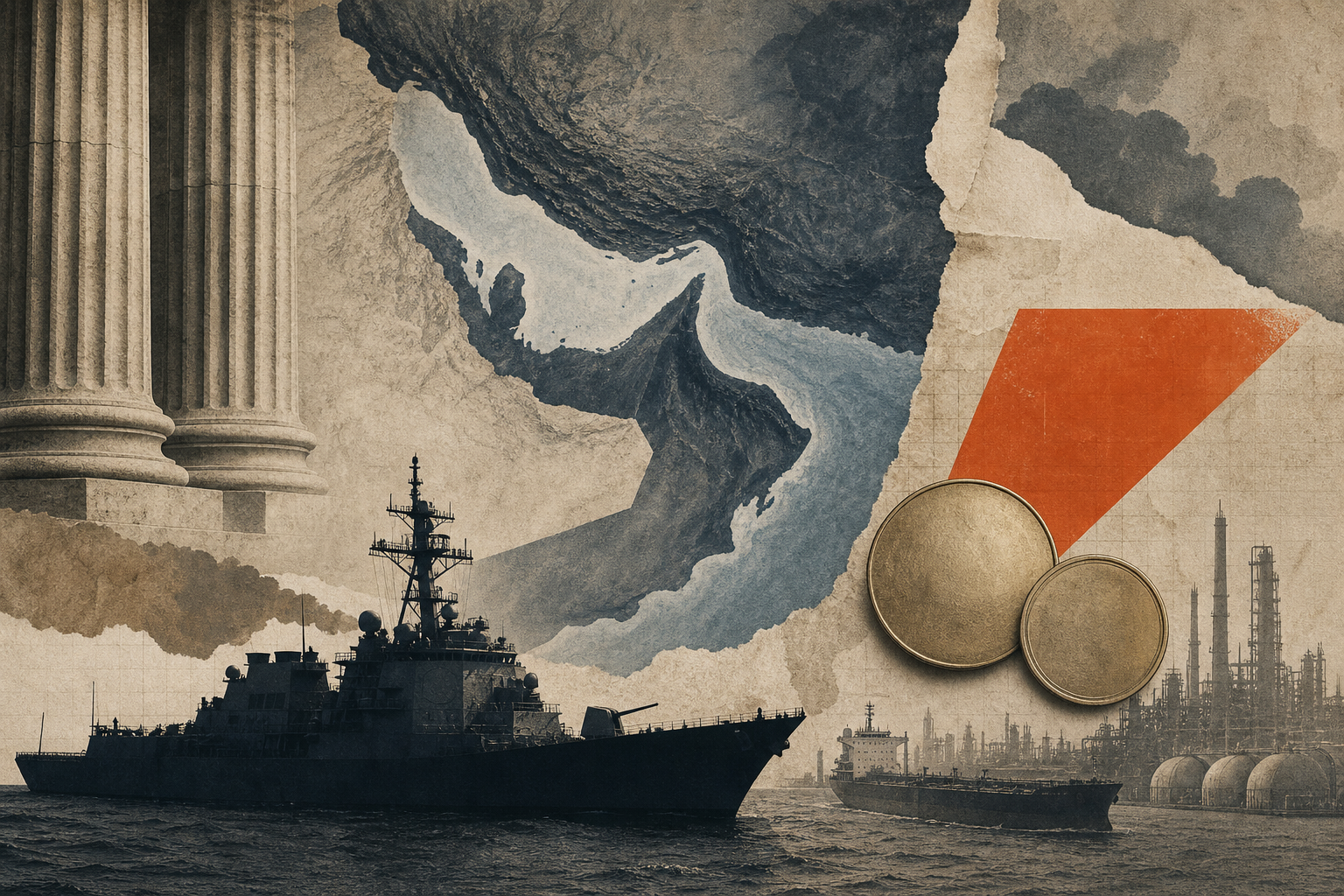
US Central Command struck three Iranian crude oil carriers on 5 September 2026 after the Islamic Revolutionary Guard Corps launched ballistic missiles toward two US Navy warships. A US aircraft carrier and guided-missile destroyer successfully evaded the attacks; no American personnel were harmed. That is the CENTCOM / DVIDS release.
CENTCOM says it permanently disabled the IRGC crude carriers M/T Downy off Kharg Island and M/T Stark 1 near Jask, and completely destroyed the unladen M/T Kylo (also known as Noxen) in the Gulf of Oman after the crew was directed to abandon ship. The three carriers are part of a multibillion-dollar shadow network that funds the IRGC and its regional proxies, on that release.
“Let the message to the IRGC be clear: If you shoot at two of our ships, we will impose an even higher economic cost —taking out three of yours,” said Adm. Brad Cooper, CENTCOM commander.
Reuters stamps the same CENTCOM strikes and adds the IRGC response: Tehran said it targeted three tankers on unauthorized routes in the Strait of Hormuz as well as three US-linked vessels in other areas.
On 7 September, Mohsen Rezaei, secretary of Iran’s Supreme National Security Council, said Iran will declare a new “restricted” maritime zone outside the Strait of Hormuz in the coming days, beginning from the US Navy’s blockade line and extending into parts of the Gulf, with any vessel entering placed on a sanctions list — that is the Anadolu Agency stamp citing Press TV. Rezaei also said Iran and Oman would sign a corridor agreement with entry and exit under Iranian control, claimed the strait was “completely closed,” and called President Trump’s claim that it remained open a “big lie.” Those are Iranian official claims on that page — attributed only, not restated as independent fact.
Monday’s WTI near $90 / OPEC+ October hold is the Asian crude reaction under the same weekend escalation.
Germany’s July industrial production miss (−1.1%) is a separate Destatis print — distinct from this US–Iran tanker primary.
Germany’s AfD Saxony-Anhalt win (43.8%) is a separate domestic politics print — distinct from this US–Iran tanker primary.
USD/INR’s Monday open near 94.38 is a separate rupee tape — distinct from this US–Iran tanker primary.
WTI’s European session near $89.50 is a separate EU-session tape — distinct from this Asian WTI / tanker note.
Saudi Aramco’s Jizan facilities hit Monday, WTI above $90 is a separate Red Sea–adjacent strike tape — distinct from this Hormuz tanker / WTI session note. Hormuz is not reopened.
WTI’s climb to $91.15, highest since July 24 is a separate late-session tape — distinct from this EU/Asian WTI / Jizan / tanker note. Hormuz is not reopened.
Qatari LNG tanker Al Marrouna’s rare Hormuz exit attempt is a separate laden-LNG tape — distinct from this tanker / WTI / Basra / Jizan note. Hormuz is not reopened.
GBP/USD’s Labor Day climb to 1.3541 is a separate thin-liquidity tape — distinct from this tanker / GBP-JPY / earlier Cable note. Hormuz is not reopened.
WTI’s Asian slip to ~$90.40 / below $90.50 is a separate Tuesday Asia tape — distinct from Monday’s $91.15 / Jizan / Al Marrouna / tanker notes. Hormuz is not reopened.
Gold’s Tuesday Asia snap near $4,425.55 is a separate session tape — distinct from this gold / PBOC / USD-JPY / tanker note.
USD/CAD’s slip near 1.3780 as oil lifts the loonie is a separate European-session tape — distinct from this WTI / tanker note. Hormuz is not reopened.
Kuwait’s ~1M b/d export recovery via Hormuz and STS is a separate Gulf-flow tape — distinct from this Basra / LNG / WTI / CAD / tanker note. Hormuz is not reopened.
Also see: WTI Advances Above $92.00, Highest Since July 23, as Hormuz Tensions Stoke Supply Concerns.
Also see: Suez Canal Revival Gathers Pace as Hormuz Crisis Reroutes Ships.
Also see: NZD/USD Slips to 0.5843 After a Low at 0.5836 as Bears Test 200-Day SMA.
Also see: Gold Slides Below $4,400 as Fed Hike Bets and Mideast Jitters Revive USD Demand.
Also see: CENTCOM Destroys 5 More IRGC Crude Carriers After Missile Attacks on US Warship.
Informational only. Not trading advice, signals, or a guarantee of any market outcome.
Written and fact-checked with AI assistance, reviewed by a human editor before publication.
No comments yet. Be the first to share your view.
EIA crude inventories drew 0.4M for the week ending September 4, versus a 1.4M draw forecast and a 4.5M prior draw — a smaller-than-expected decline.

WTI jumps toward $97.00 (+2.93%) as US–Iran escalation lifts the supply-risk premium. Reuters: Iran hit 10 ships near Hormuz after the US sank five Iranian tankers; Houthi hits on Saudi energy facilities.

Lagarde says inflation stays well above target into 1H27 and returns around target toward end-2027, with longer-term expectations near 2%. Data-dependent stance; further tightening may follow. Soft ECB print + EUR post-print — PC≠hike reprint.