
Macro20d ago
EIA Crude Inventories Draw 0.4M vs Forecast 1.4M Draw
EIA crude inventories drew 0.4M for the week ending September 4, versus a 1.4M draw forecast and a 4.5M prior draw — a smaller-than-expected decline.
Editor·1 min read
Learn how to use a forex economic calendar: UTC release times, impact colors, and consensus vs actual. Then open our live calendar and prices.
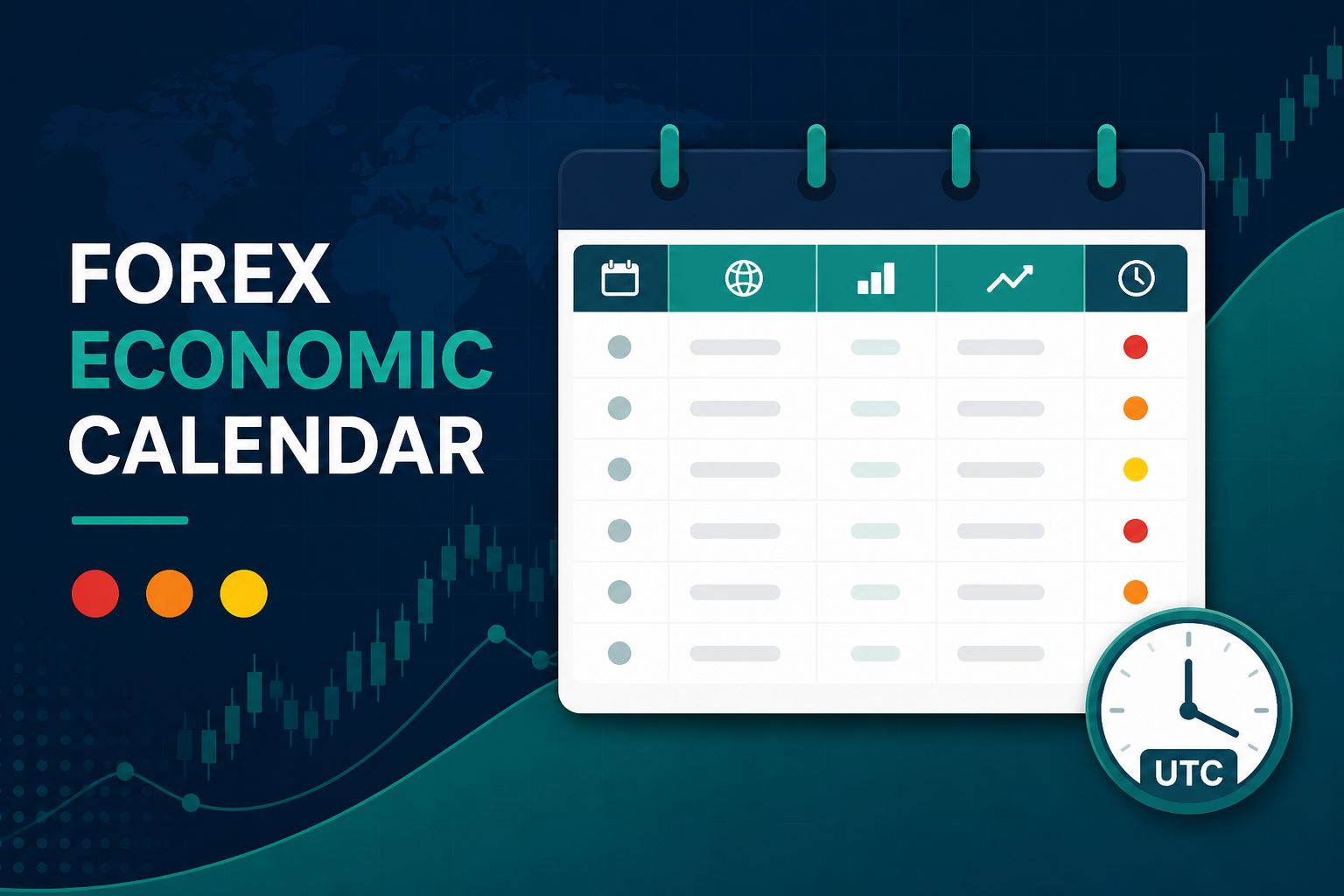
A forex economic calendar lists scheduled data releases and central-bank events that can move currencies, gold, and related markets. Knowing how to use a forex economic calendar comes down to three habits: read times in UTC, filter by impact, and compare consensus to the actual print. This short guide shows the workflow traders use before major sessions—without signals or profit promises.
Most calendars (including ours) stamp releases in UTC. Convert once to your local zone, then stick to UTC when comparing brokers, news wires, and charts. A 12:30 UTC U.S. CPI print is not “lunchtime” everywhere—mismatched clocks are a common reason people miss the first minute of volatility. Mark the week’s high-impact slots in advance; many traders step aside or tighten risk around those windows rather than chase the first tick.
Calendars typically tag events as high, medium, or low impact (often red / orange / yellow). High-impact—“red folder”—items such as nonfarm payrolls, CPI, GDP, and policy-rate decisions tend to widen spreads and spike ranges on majors (EURUSD, GBPUSD, USDJPY) and gold. Medium events can still matter for a specific pair; low-impact prints rarely justify interrupting a plan. Filter the board to high impact first, then add medium only for currencies you actually trade.
Each row usually shows three numbers:
Price often reacts to the surprise: actual versus consensus, not the headline alone. A “strong” number that merely matches expectations can be muted; a miss versus consensus can move the dollar or gold quickly. Treat revisions to the previous print as part of the story—markets price the full packet, not a single cell.
Use the calendar as a checklist, not a crystal ball:
Pair the calendar with live quotes when you review a release, and keep Macro notes nearby for the policy context behind the print.
Open the live economic calendar to scan today’s UTC schedule and impact tags, then check live prices for majors and gold around the print. For broader context, browse Macro explainers alongside the calendar—not as trade calls, but as a structured reading habit.
UTC is a single reference that does not shift with daylight-saving rules in every country. Brokers and data vendors align on UTC so a 12:30 release means the same instant worldwide; you convert to local time only for personal planning.
High impact flags events that historically produce larger moves and wider spreads—often central-bank decisions and top-tier inflation or jobs data. It is a volatility heads-up, not a guarantee that price will trend in a particular direction.
Focus on the gap between the forecast and the released number. Markets often price the consensus in advance; the surprise (and any revision to previous) is what tends to reprice currencies and gold in the minutes after the timestamp.
No. A calendar times risk and attention; it does not replace chart structure, liquidity, or your own risk rules. Use it to know when conditions may change, then verify price on a live quote page before acting.
Written and fact-checked with AI assistance, reviewed by a human editor before publication.
No comments yet. Be the first to share your view.
EIA crude inventories drew 0.4M for the week ending September 4, versus a 1.4M draw forecast and a 4.5M prior draw — a smaller-than-expected decline.

WTI jumps toward $97.00 (+2.93%) as US–Iran escalation lifts the supply-risk premium. Reuters: Iran hit 10 ships near Hormuz after the US sank five Iranian tankers; Houthi hits on Saudi energy facilities.

Lagarde says inflation stays well above target into 1H27 and returns around target toward end-2027, with longer-term expectations near 2%. Data-dependent stance; further tightening may follow. Soft ECB print + EUR post-print — PC≠hike reprint.